$155.00
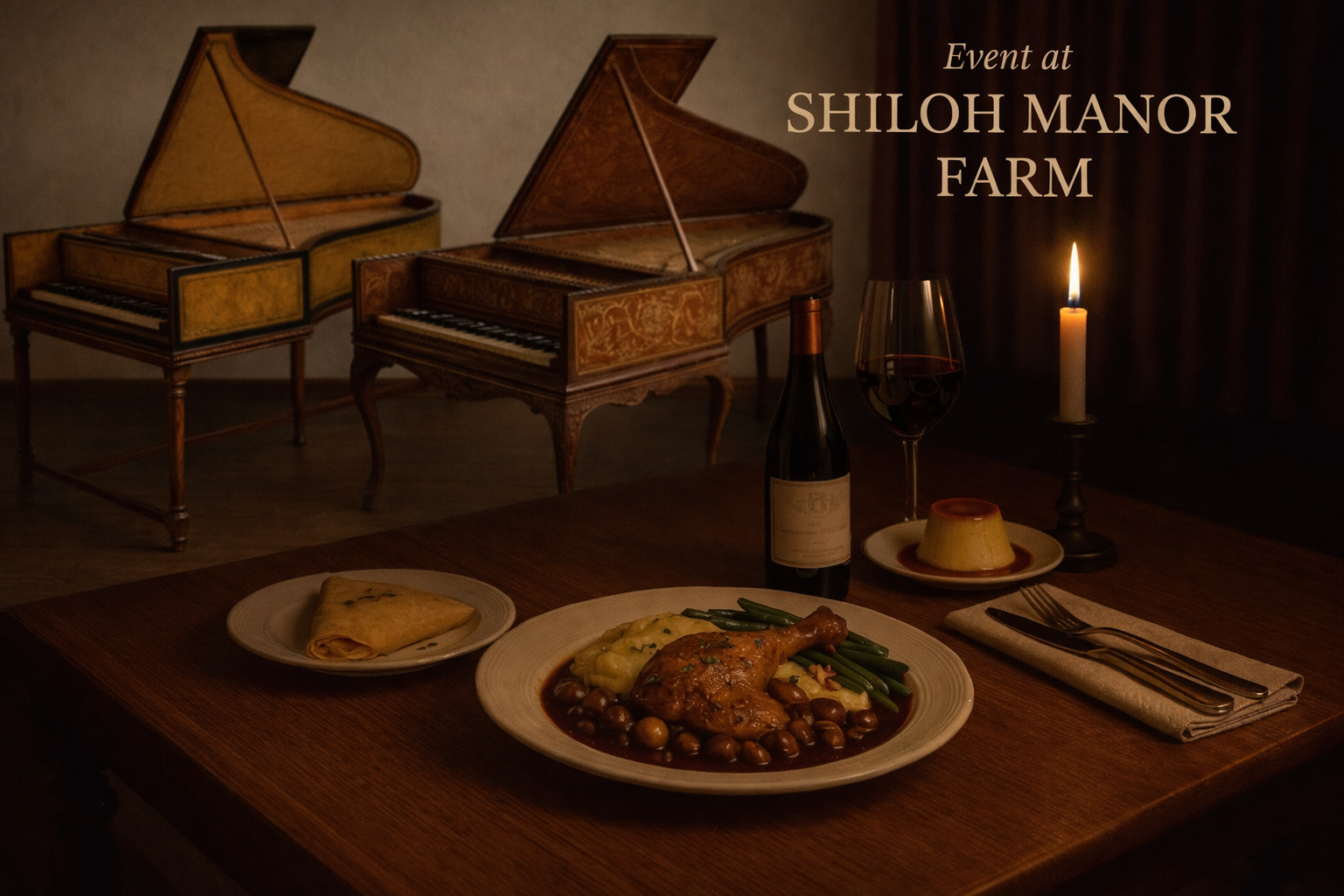
The Wheatland Concert Series opens its 5th season on February 28 at 6:00 pm with a rare and exceptional performance of music for two harpsichords. Professors Paula Maust and Mark Janello of the Johns Hopkins University Peabody Conservatory will perform works by Johann Sebastian Bach and his sons, showcasing the brilliance and complexity of Baroque music. The evening includes a prix complet French dinner catered by Magnolias at the Mill, featuring a mushroom crêpe, coq au vin with whipped potatoes and haricot vert almondine, and crème caramel, paired with imported wines served during intermission. Tickets are $155 per person and include taxes, wine, and gratuities.
Out of stock
Description
Happy 2026!
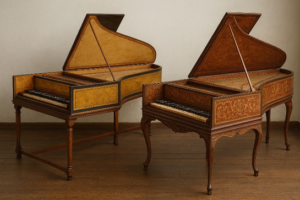 The Wheatland Concert Series kicks off its 5th season with an amazing performance of music for two harpsichords on February 28th starting at 6:00 pm. Acclaimed scholars, educators and concert harpsichordists Professor Paula Maust and Professor Mark Janello of the Johns Hopkins University Peabody Conservatory will be performing works by Johann Sebastian Bach and his sons Johann Christian and Wilheim Friedemann. Magnolias at the Mill will be catering a sumptuous seasonal French dinner featuring a mushroom crepe, Cog au Vin served on a bed of whipped potatoes and haricot vert almondine, and crème caramel for dessert, complete with paired imported wines during intermission. Tickets are $155/per plate, prix complet – including taxes, two glasses of wine and gratuities (click for menu). I hope you can join us!
The harpsichord is synonymous with music of the Baroque period between 1600 and 1750. Before the harpsichord’s invention in Italy in the early 1400s, string instruments had only ever been plucked by fingers, like a lute or modern-day guitar. In a harpsichord, the plucking method is transferred to a keyboard. When you press a key on the harpsichord, a thin wooden jack springs up and plucks the metal strings with a thorn shaped quill called a plectrum. This plucking feature gives the instrument its light and uniquely crisp sound, allowing rapidly played notes to remain distinct and not blur together. This unique characteristic of the harpsichord was a crucial requirement for Baroque composers like Johann Sebastian Bach whose compositions were very fast and complex.
 Despite the harpsichord’s great popularity, it had one major weakness compared to most other instruments. The string plucking mechanism made it impossible for the composer or musician to alter how loudly or softly the instrument played. In 1698, the Italian instrument maker Bartolomeo Cristofori developed a new instrument and called it “cembalo che fà il piano e il forte” or “a harpsichord that can play loudly and quietly”. Sometimes the name “pianoforte” is still used, but more often today we call that instrument the “piano.”
The increased versatility of the piano and changing tastes in music meant that the harpsichord quickly faded into the background and together with much of the Baroque repertoire was largely forgotten about. Many years would pass before musicians began to gradually rediscover an interest in the harpsichord and other instruments of the Baroque period and once again the harpsichord reemerged onto concert stages.
Harpsichords are expensive and delicate instruments that are both difficult to move and must be perfectly balanced to be played together, which is why modern recitals featuring two harpsichords are scarce. Our performance of the repertoire for two harpsichords left by Bach and his sons can only be described as fantastic and we hope you can join us for this one-of-a-kind recital and French wine dinner.
Additional information
| Courses | 4 Course Mean |
|---|